

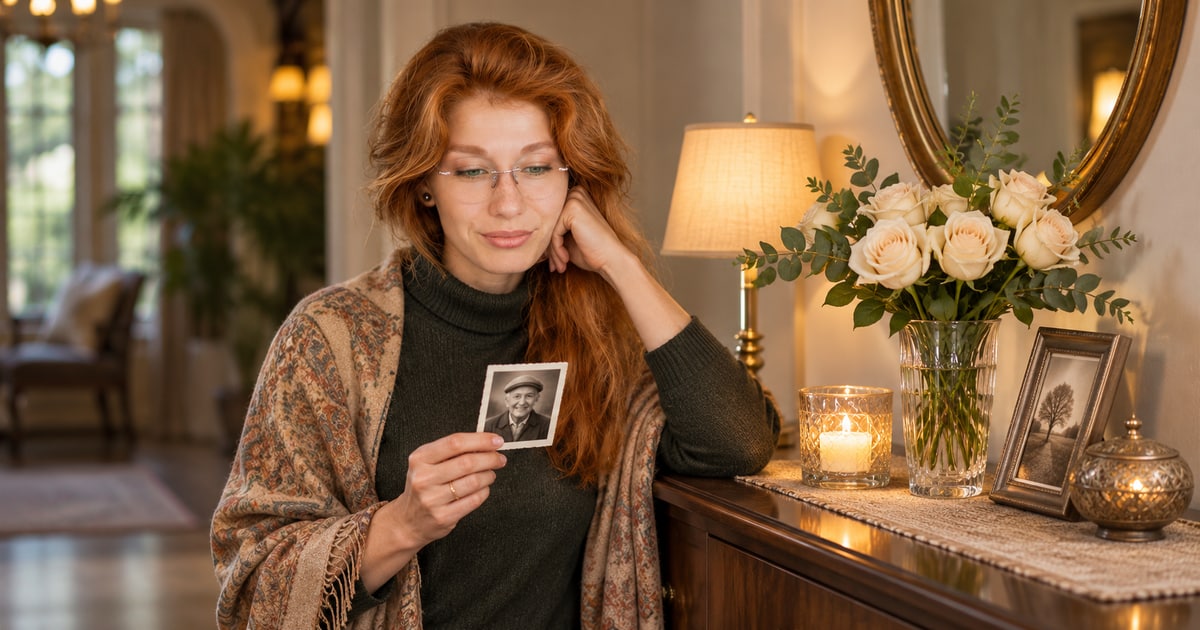
A round glow in a funeral photo can make a small detail feel especially close. You may connect it with the person you lost, while someone else may notice a candle or a reflection. If you want to check the image, start with the original. If you want to keep the memory, write down what was happening that day and what the picture brings back.
Check light when you feel ready
Funeral photographs may contain lamps, windows, candles, glass or polished objects. Flash can also light airborne dust. If you are curious, open the original at normal size and look for the brightest sources near the frame. Compare a nearby image from the same angle, if you have one.
You can leave that work for another day. If the image is a family photo, treat it as a keepsake first. Save the original and work on a copy so adjusting contrast or marking the spot does not change what other people can review.

Read the visual guide as text
- The scene. Note the setting, light and original frame.
- The memory. Name the detail that reminds you of the person.
- The caption. Describe the association in your own words.
- The audience. Choose who can see the picture and the story.
Give the memory a caption that can stand on its own
Imagine seeing a light near a vase of roses at Aunt Carol’s service. The flowers remind you of how she cut roses for the kitchen every Saturday. The original also shows a lamp reflected in a pane behind the vase. A caption could read “These roses reminded me of the way Carol used to bring in flowers on Saturday.”
Researchers have studied how bereaved people use photos, objects and memories to keep a sense of connection. A study of bereaved parents and photographs gives examples of how context such as people, time and place shapes the meaning of a picture.
Let others choose how much they want to share
If a relative says the orb is a message, you might answer, “I’m glad it gave you comfort. It reminds me of the roses.” If a relative sees a reflection, you can talk about the person together without needing the same explanation for the light. Ask before posting identifiable mourners or details about the service.
A photo cannot direct your medical, financial or family decisions. If a reading uses grief to pressure you into a payment or an urgent choice, you can stop the session. Our guide to boundaries during grief offers language you can use.
Frequently asked questions
1. Why might a light orb appear in a funeral photo?
Windows, candles, indoor lighting, flash and reflective surfaces can all leave spots or circles in a picture.
2. Is the orb proof of a visit from the person who died?
One photograph cannot establish that. You may still experience the picture as a personal symbol of remembrance.
3. How can I caption the picture?
Write what the photo brings back, such as the person’s favorite flowers or the song that played. Speak from your own experience.
4. Should I share the picture publicly?
Consider how it portrays people who are grieving and ask before sharing identifiable images or private details. Keeping it in a private album is an option.
5. What if looking at the photo makes me feel worse?
Set it aside and return only if you want to. A trusted person, grief support group or qualified counselor can help if you want support.