

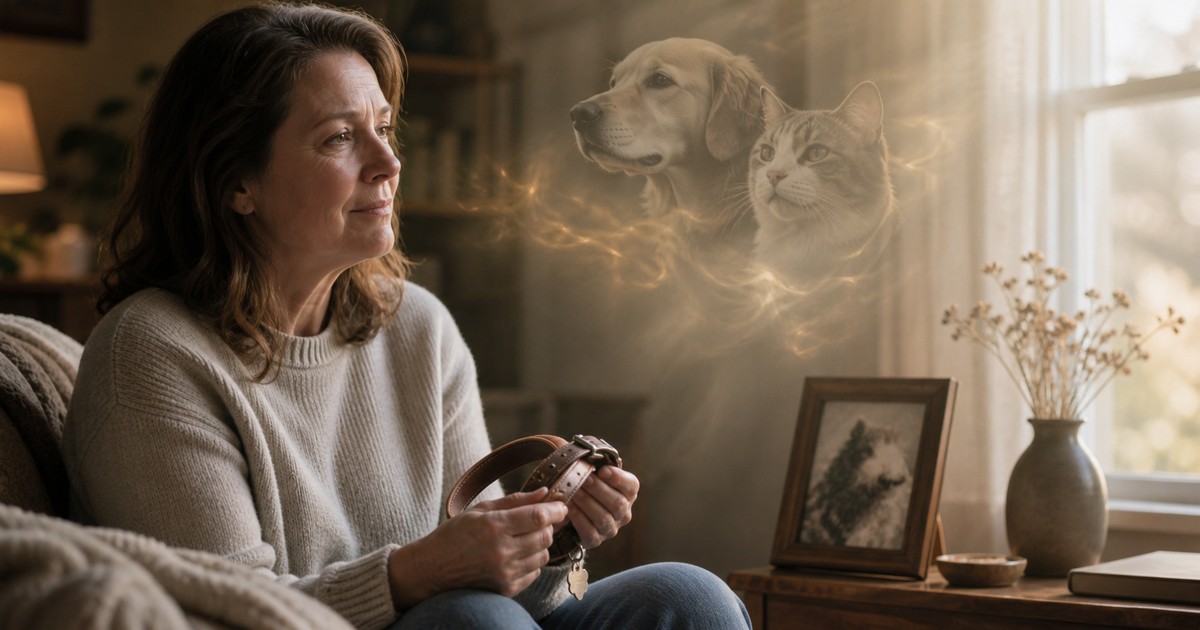
Losing a companion animal can alter the sound, rhythm, and emotional shape of a home. Some bereaved people seek mediumship and hope a pet will appear in the reading. Mediumship is a spiritual practice; scientific evidence has not established that a reader can contact a deceased animal. A reference may still feel meaningful, but it should be held alongside the realities of grief, memory, suggestion, and the continuing bond many people maintain with a beloved pet.
Quick Guide
Why pet loss deserves to be taken seriously
Companion animals are woven into routines, touch, care, identity, and family life. A study of people who had lost a companion animal found that grief can be severe and that attachment and continuing bonds may shape the experience. Dismissive comments such as “just get another pet” can deepen isolation.
There is no required timetable for grief and no obligation to seek a reading.
What a pet reference can mean
A medium may describe an animal, name a habit, or offer a symbolic impression. A believer may interpret that as contact. Other possibilities include chance, broad statements, prior information, cues from the client, or memory. An ethical reader acknowledges uncertainty rather than insisting on one explanation.
Meaning is personal; proof is a separate question.
Set expectations before the session
Decide whether you want an open reading or to ask directly about your pet. Choose a spending limit and avoid readers who promise guaranteed contact or say the pet is trapped, angry, or requires paid spiritual work.
You can withhold photos and details at first if you want to evaluate specificity. Do not treat a miss as evidence that you failed to love correctly or grieve correctly.
Three questions to ask before you pay
- “How long is the reading, what will it cost in total, and what happens if I need to cancel?”
- “Can I keep my pet’s name and photo private until I’m ready to share them?”
- “What will happen if I want to pause, end the session early, or keep it unrecorded?”
You can ask these by email if a call feels like too much. If your main need is to talk about your pet, Cornell’s pet-loss support resources include a listening line and other places to turn.
Evaluate the reading fairly
Write down the reader’s statements before discussing them with others. Separate specific details from general ones and count misses as well as hits. Notice whether you supplied information that the reader later repeated.
A reading can be emotionally valuable without being conclusive evidence of after-death communication.
Sensing a pet’s presence during grief
Bereaved people sometimes report sensory or quasi-sensory experiences of the deceased. Research on bereavement after human deaths has examined these experiences. If you’re looking for practical help with a dream or the feeling that your animal is still nearby, read dreaming about or sensing a pet after they die. Briefly thinking you heard tags or felt a familiar movement does not by itself establish supernatural contact.
If experiences are frightening, persistent, commanding, or interfere with functioning, discuss them with a qualified health professional.
Continuing bonds and practical remembrance
A bond can continue through a photo, paw print, story, donation, memorial walk, or the care you give another animal. These practices do not require certainty about an afterlife. They make room for love and loss in daily life.
Pet-loss groups, veterinarians, grief counselors, and supportive communities can provide help that a reading cannot.
Ethics for mediums
Do not guarantee contact, diagnose the animal’s death, blame the guardian, or pressure for repeated sessions. Avoid presenting common pet behaviors as uniquely evidential. Make fees and time clear, respect emotional limits, and recommend grief support when appropriate.
The reader’s role is not to replace veterinary, medical, or mental-health care.
Continue Exploring
Frequently Asked Questions
1. Can a medium definitely contact my pet?
No reader can responsibly guarantee contact. Mediumship is a spiritual practice whose central claim has not been scientifically established.
2. Why didn’t my pet appear?
A nonappearance says nothing reliable about your bond, your pet’s wellbeing, or how well you are grieving.
3. What if I think I hear my pet’s collar?
A brief familiar sound can bring a vivid memory to mind. If an experience feels distressing, keeps happening or makes everyday life difficult, speak with a qualified health professional.
4. How can I test a reading?
Limit advance information, record exact statements, separate specific from general details, and count misses as well as hits.
5. What are mediumship red flags?
Guarantees, fear, blame, claims that a pet is trapped, demands for secrecy, or pressure to buy repeated cleansing or rescue work.
6. Can a reading give closure?
It may bring comfort, but no reading can guarantee closure. Grief often changes rather than ending at one moment.
7. How can I memorialize my pet?
Create a photo book, preserve a paw print, tell stories, donate, plant something, or join a memorial event.
8. When should I seek grief support?
Reach out when grief feels unmanageable, functioning is impaired, isolation is deepening, or safety is at risk.